
The Update 2026

Greeting from Peten dear friends,
There were two beautiful instances that took place in the U.S. this past year which stand out in my mind. One, was the Chris Cashen family Farm at Millers crossing, who planted a field of sunflowers. Being seen for the first time ever by Columbia County New York residents, the field became an instant 'attraction', with visitors from all over pulling up along the road side to take selfies and photographs of the vast splendor.
The second, was the Buddhist monks and their rather famous dog Aloka, who walked a goodly part of this country, moving the whole world to tears of deepest gratitude for thier enormous yet quiet gesture that carryied one message. Step upon step, each foot pressing a prayer of peace into the ground, into the eyes they met, reaching out to touch uncountable numbers of hands and hearts along their way. I did not see either of these phenomenons in person, I saw them both go wild on social media.
Similarly both took forethought, and sheer will, turning 'possibility' into something tangible for us to not only to be witness to, but invited us to be a part of the extraordinary- to pause, to reflect, to feel an expansiveness, a sense of unity, and the permission to exist for a moment in time out of time- a moment of stillness, contemplation and wonder, amid the hustle and bustle of our daily comings and goings.
These kind of moments, even in their briefest forms, have always been of interest to me while the feeling they provoke is so distinctive. The moment you round a corner to come across the most spectacular tree in all its fall glory, or see a clown dressed up driving a motorcycle off to a gig, a peek at a sculpture while passing Storm King on the I-87 NY Throughway, or the "Bewegtes Land" the art project that gained attention for turning the rural landscape into a temporary, high-speed theater. In my humble experience, I feel they all carry a common thread. They make us do an involuntary double take, smile inadvertently with joy, they hijack our attention, they draw us in.

2026
I wanted to start by personally thanking every person who receives these emails, for your interactive role and participation in the work we do as a reader and supporter.
It is important to recognize and acknowledge the value you bring to the work. The simple act of opening the email, is a gesture of interest and good will that does not go un noticed. Your time, attention, and the invisible thread of thought you send towards our work, have presence in the atmosphere and air around us throughout the year. It is the collective energy you bring, while it is 'not bread alone that feeds us', it remains therefore, a great honor to work collaboratively with you.
I sent a very brief note around the end of the year to you wish happy holidays, and to quickly let you know that we hit out matching grant target on our fundraiser of $15,000 for the start up of la "CASA Verde" Center for Sustainable environmental Arts- Thanks to so many of your generous supportive donor contributions, the start up of the initiative has been fully funded!
From as early as our first year, 2023, this project, like all of our other projects, had already been identified, outlined, begun to be tested out, and made publicly visible. While all of our projects have been defined based on listening to community needs, community assets, and community culture, their evolution and outcome (results, 'deliverables') ultimately depend on the community.
Our role in accompanying the community to create solutions that are self owned- to assure they are the direct beneficiaries- happens through ongoing dialogue- through call and response-maintaining an openness to listen- to question- to apply what we learn- to be able to be flexible- to shift and adjust in real time- to continually update our alignment given new information- to continually correspond with, and reflect the organic growth of the community itself.
Now entering our third year of activities in Peten, I will define and provide greater clarity on 'what phase of development' each project is in using the key words below as we continue forward.
We Initiated all of our projects in Peten in 2022. We shared the announcement of our move from Antigua, taking up a second location in Peten, and presented our new projects publicly for the first time in our first annual Big Update report blog post 2023.
Initiating: Defines the project, confirming its feasibility and value. Key tasks include identifying project scope, goals, and stakeholders to create a project charter.
Planning: Creates a detailed roadmap for the project, including scheduling, resource allocation, risk management, and budgeting.
Execution: Involves carrying out the planned work to produce the deliverables. This phase involves team management, task execution, and communication.
We began feasibility and ground research studies identifying all of our projects in 2021-22, extending into 2023. Financially this was made possible by a member of our Trustees Cirlce. During this time we also paid the salary for a teacher to support 128 students to complete graduation requirements, and set up 14 families to work with Contour Lines facilitating the transitioning of their land to an agroforestry method. We also began ceramics with children in the front room of my house.
In 2023 with your support we raised $6,000, and $10,000 in 2024 for the Campesinos Association ADICA Peten, providing Medical Emergency and Food Security to our villages most vulnerable families while working towards all of our project goals. We actively began promoting back yard Community Gardens, Seed share, Initiating the Garbage and Glyphosate proposal, furthered the Associations Land Conservancy initiative, began to launch our new Ceramics space hosting sessions for the children, and initiate our Women led Cooperative.
In 2025 we continued with all of the above, walking each of our projects forward, and reached our $15,000 matching grant for the start up and execution phase of our community arts and ecology center-la Casa Verde !
We will not be doing a regular crowdfunding appeal this year. We are focusing on grants for each of our projects and launching the global premiere of our Museum of environmental Public Art's (MAPA) Festival de Arte Social first sustainably produced, immersive, interactive, community engaged, exhibition titled "Shared Inheritance" made possible through possible through VIP donor holdings, complimentary international grants and partnerships with local and national associations, businesses, foundations, the UK embassy in Guatemala, the Ministry of Culture, and the Ministry of Environment, amongst others. ( see more below)
We are in the process of setting up our 501( c) 3 fiscal sponsor this year in order to accept US Tax deductible donor contributions again. We previously had an agreement with the New Roots Foundation who went out on a limb as a tremendous and very generous personal favor. With both of us being based in Antigua they were temporarily able to extend fiscal sponsorhsip to us. Moving to Peten, in our early stages, bootstrapping on a shoe string was understandable and acceptable, however with activity now in full swing, we are putting priority on establishing a longer term fiscal sponsor again.
We touch on the conversation of forming our own foundation that is registered in both the US and Guatemala- as a future goal. Until then, our alliance partnerships, and the endorsement of UNESCO Guatemala, have served our small but mighty grassroots organization beautifully.

La Casa Verde
Our 'Kids Space' Open Sessions continue every Friday with over 30 children are now rotating through our open sessions. The flow and turn out has been incredibly organic. Initially I was a little concerned we might get everyone at once, but its been working out really well. Some days we have 12 kids, somedays we have two. It's not the numbers that matter though, it's about the quality of the time spent, the individualized attention, and the opportunity that is presented in receiving each kid that walks through the door.
These aren't classes parents signed them up for. The children are coming because they choose to. They have done their chores, aren't needed at home, and have gotten permission to have some free time for a little while in their afternoon. Accompany these kids as they grow to explore their ideas, techniques, and abilities, is beautiful to be a part of and highly rewarding.
Our last session I had just these two older boys (pictured above) who wanted to 'take it bigger'. To apply more advanced skills in what they make. Both of them got permission to come, only because the parents think it might be a practical, useful trade for them to know. They stepped in ready to do some serious work. I didnt ask Josue to do the thumbs up, he caught on I was quietly trying to take a photo of us...
Both boys have a lot of responsibilities at home. Eduardo, (10 years old) on the right stopped going to school when he was 8. He helps his mother, Iris, attend customers, and his younger brother Erik, all day, every day, at their family's small corner store right in front of la Casa Verde. He is also highly inventive and creative. I always see him gluing together paper houses and the likes in his spare moments.
I made an exception for the boys to take their pieces home. For one, to show their parents what they are doing 'is for real', and two, to continue working on during the week if they wanted to- in their spare moments.

A recent post from "Casa Guatemala - Friends of Guatemalan Children’s executive director, Heather Graham, gives us insight into the barrier most Guatemalan children face to receive an education."
"In the country, education is compulsory only through 6th grade, government schools run half days, and just 30% of children finish elementary school. In rural Indigenous communities, many children never make it that far."
The government isn't checking if you do or don't send your children, much less so in our little off the track agrarian village of 1,840 inhabitants. Many of the youngsters will have already joined the work force and have started their own little family by 15-16 years old.
We can speak about the importance of the arts and creativity in society, but also on a sheely practical level, clay is an abundant natural and ecological resource here, whose potential remains yet untapped as both a material and an alternate source of income. We are off to a good start folks.
Whether to gain life skills, or simply to enjoy creating, having this community space and being able to provide our (underserved) children and families a (re-) introduction to one of my own personal favorite materials and its uses, in the context of our remote rural setting, is a great honor and a pleasure. So thank you to all of you, for helping to make this possible.

Looking ahead
Public Arts and Heritage Craft Programs
With the Casa Verde start up- early execution phase fully financed, we are setting up our long term programming to include weekly training sessions in ceramics, with our group of village ladies ( gents welcome as well).
We will be continuing a conversation (that we initiated while still in the earliest phases of becoming) with Casa del Escultor ( the Sculptor's House) with four locations successfully running, offering sculpture and art classes in Guatemala City- have expressed their interest in fortifying and assisting us with our mission to "disseminate arts education for all ages into rural regions". They have wheels, teachers and resources they would like to share with us.
Timing is everything. While we have identified and established connections with quite a few other organizations and local stakeholders, we also have to be ready and able to recieve what they are offering- Calculating, coordinating and synchronizing support that matches our growth and stages of development. This goes for all of our projects.
We are moving from the initiating phase, into the planning phase of expanding our programming, to include guest workshop hosts such as a Wild Clay Pro, (we are still duking it out getting the receipe on our 5 primary native clay bodies balanced and perfected for longterm sale and use).
We have spoken to Belize Banana Fibers who have a great community initiative just across the border making products out of the natural fiber extracted from banana tree stems. They are excited to visit us this year. We also plan to officially begin our basket weaving workshops that I have mentioned, with the prickly jungle vine, Bayal.
We are applying to the Unesco Cultural Diversity Fund to support this next stage of growth and are aiming to be able to open our little community storefront with handmade, homemade community products between 2026-27.
With only small threads remaining to the ancestral, nature-based ways of producing and living, we are calling forward practicing greater awareness of the greater benefits in continuing them moving forward- in a world that needs greener solutions in order to sustain the future of our planet.
As we know, heritage practices are not outdated or a digression, they are in fact a direct line to the future. We hope to set an infectious example for young people in the region, to imagine a more hopeful and prosperous future that does not need to include temporary migration to the US in order to “make it.”
Local Food Sovereignty
"Watching nature lead and following its cues", brings about unexpected outcomes for this foreigner, when it comes to life in the tropics. My initial assumption was that the soils her would be quite fertile, as they had been covered by the jungle canopy naturally decomposing organic matter for hundreds and hundreds of years. Wrong. I recently saw a documentary that had found that right around the ancient settlements in the Amazon, they identified areas of fertile soil. Whether they chose to settle in those areas because the soils were already fertile, or whether they worked the soils to become fertile, remains undetermined as of yet.
Much of our soil here is not great, however, for example, regular commercial maize seed will not grow, but an older heirloom variety will. A few years back, the majority of the corn crops were entirely lost to insect plague. This loss would have dire consequesnces for people here as their staple food source. The governor personally told me that if I put together a list of people who needed corn seed to help make up for the loss, he had a seed donation available from the government. I ran around like crazy to for naught a day or two. I had not gained the confidence of the my neighbors at that point to the extent I have now. Finally someone told me that the seed that was being offered " no sirve", it doesn't work here.
After countless joyous attempts and failures to live more sustainably from my own garden, I have finally accepted and come to learn what does and doesnt grow in the ground. By trial and error, and by listening to those who live here. Not a week goes by without someone pointing out to me that this or that native flower or plant is medicinal, or can be used for this or that. I have barely scraped the surface on the sheer amount of biodiversity that nature provides a massive living library of edible and healing plants that grow wild and freely everywhere.
Although apprenticeship working under native specialist Ruth Dufault for seven years in New York serves to make identifying 'special plants' somewhat instinctual, this certainly aint the forests and fields of New York. All of the plants and nature here are new to me, providing more than a lifetime of discovery.
While back yard gardens were not a yet big thing when I arrived, I had set out to create a demonstration garden using every alternative tecnique in the book.
I had nearly given up on trying to grow anything until we could build a greenhouse and buy in loads of compost and other soils, but in becoming familiarized with traditional native species I have found native greens that are nutritionally equivalent to Chard and spinach- and give all year round, and have switched to propogating and sharing more of the lesser used native species with my neighbors instead!
To see my own once barren a plot of land become a thriving green mini ecosystem, a haven full of wildlife- over the past few years- To watch and gain first hand experience of how quickly nature can bounce back- especially in the tropics where it comes back twice if not three times as fast- has been nothing short of amazing. You remember how excited I was to see the first earthworm on the property, the first mushroom, the first toad, the first tree frog? Let alone the butterflies, the bees, the birds, the lizards. Adding in features and landscape design, I keep the property tamed and civilized just enough as not to frighten my neighbors, who would rather see bare ground- with no potential venomous potential snake hide outs, especially with so many little children and domesticated animals running around town.
And yet, naming the number of plants growing, the diversity of creatures that visit, and have permanent residence, does always receive a local nod of approval.

This said, we have seen an increase of 10-15% to 40-50% in community backyard gardens over the past three years!!!
Fencing is the main impediment for most people. It's a hard earned investment. While almost every family has any number of animals and their babies that roam free during the day (and night), in order to plant a bit of garden one must have fencing that is duck proof, turkey proof, pig proof, chicken, pheasant, and horses proof.
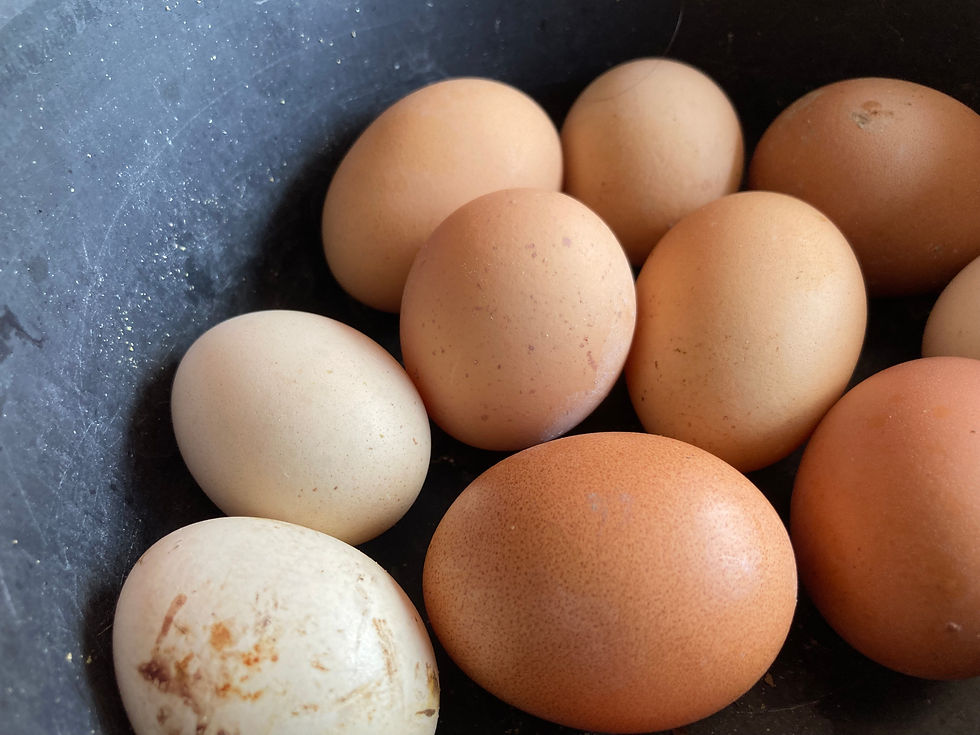
This new level of domestic planting plus the beautiful phenominon that someone in the village has native greens, someone else has raw milk, another has raw honey, someone else has lemons, another mint, cilantro, fresh eggs, some home grown- home made chili paste, some extra corn they planted, some black beans, some pretty flower seeds, some plant or tree seedlings. You just have to walk to their house, and they will go cut you some from their garden and sell it to you from their front door.
Although I had spoken about this from the beginning , the culture of these exchanges has doubled, and more and more people are interested in the idea of starting a Community Cooperative that could centralize and support greater local distribution of their products.
Ad Hock Emergency support
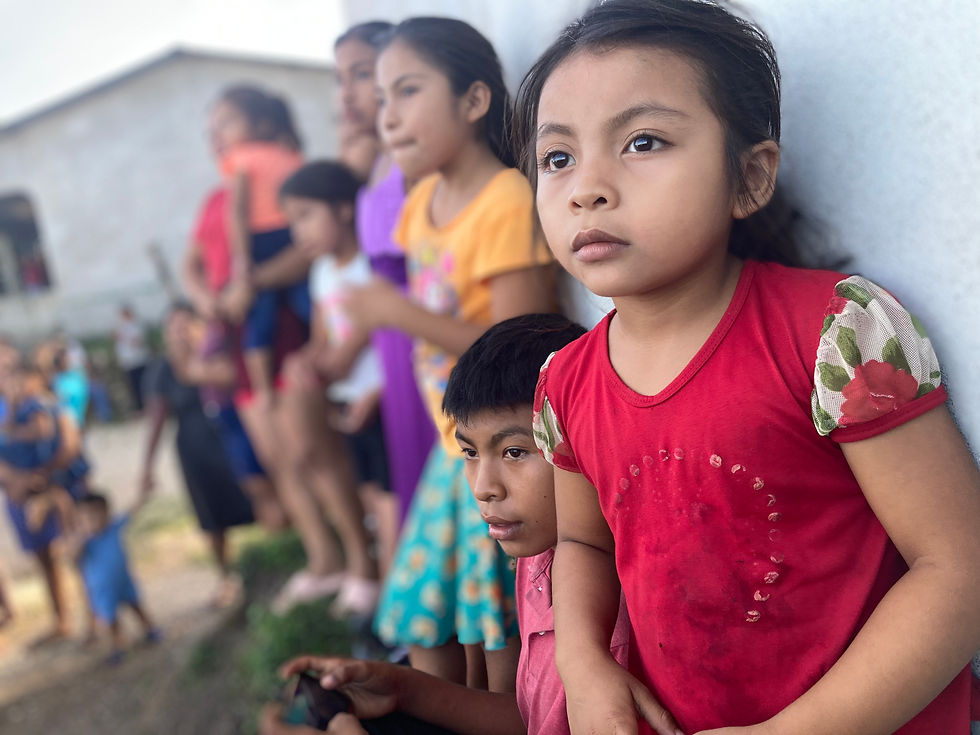
Supporting vulnerable families in un predictable medical or food emergency situations, has become rarely asked for the last while as the community has slowly but incrementally become more stable.
The greater stability of the village is also due to the current presidency. With ICE hot on the backs of our family member up north, family remittances are being sent down as quickly as possible- with a rush put on finishing the build of their 'remittance financed' houses. Somewhere around 20 cement block houses are currently being finished off, and going up as we speak. It has made for more local construction jobs- which has diversified and eased the competitive temporary jobs search for men- offering an alternative local source of income- other than the regular field and land work.

Environmental
As we all know, the world's environmental issues are not just a local but a global conversation. We are not alone in racing the clock to conserve the nature that remains. As the least developed, least monitored region in the country, the state of Petén has experienced vast neglect over the past 30 years with three times the speed of deforestation than any other place in the world.
This has led to extensive animal and plant species loss due to the decimation of deep, dense, vibrant tropical forests, giving way for industrial take-over of palm oil and beef cattle industries that are mostly for international export and largely detrimental to the environment around them.
Unmonitored chemical agricultural fertilizers, pesticides, and round up continue to be applied without information of their dangers being presented. Our communities continue to lack proper infrastructure systems for wastewater and domestic plastic trash. The results of these issues are all apparent in the highly contaminated watershed, which end up in the Petén Itzá lake basin down hill.
On the one hand there is a regional and national environmental movement being massively promoted in the upper development circles to make the zone into a global example of sustainability. But the reality our communities how are creating the majority of the damages are last to be reached. Representing the people who experience the issues and are closest to the land, our continued role is to bridge this disconnect, starting with the local community at ground level.

We continue to monitor how much effect (if any) these upper leve conversations will have on our community. While it is important to give time to those who are ultimately responsible, at what point our community agrees nothing is happening and takes it into its own hands is still pending.
We see our municipal leaders taking workshops on recycling, and saying they are starting a pilot program to separate the garbage, but then throw it all together and burn it in an open pit municipal dump- their Administration 2024- 28 tag line "Example of Progress and Development".
We have submitted our villages garbage proposal two times to our municipal mayor- third time lucky? Or do we seriously need to consider moving ahead to create our own internal village system? After another elongated period of having no village mayor, we now have new community leaders, and will proceed to negotiate this question with them.

The Campesinos Association ADICA Peten
As one of our largest and most valuable initiatives we have been asked to carry forward and be a part of , we continue to represent and assist the Association in their development. Negotiating the purchase on the Association land is coming along behind closed doors. Our conversations are being kept exclusively between the Association's management until we confirm the land purchase and can formally annouce it to our 50 families whose futures are on the line. While most of the grandparents and great grandparents here are still alive, and most from their generation knew how to and did live entirely off of the land, there is also an awareness and near memory of the traditional ways of living with nature in all of the people here.
With indigenous land rights being a major issue in Guatemala, putting together the Associations proposal, securing their dream- a dream for their own little piece of earth to live on, to re wild, re plant, restore and take care of- leapfrogging 'modern' development by shaping a model example of traditional green and sustainable living amid Peten- an epicenter ecology on the southern edge of the great Mayan forest- is invaluable.
Spanning 15 million hectares, the Great Mayan Forest is known to be one of the earth's few mega biodiverse regions left on the planet.
We are at a critical crossroads in history. Living in this prime global biodiversity zone, we continue to move forward to conserve and protect this earth for the generations to come, and thank each one of you for contributing and being a part of this effort over the past few years. This year we are focusing primarily on our development and land grants for the Association.
One might say we have a lot of balls in the air, but with ongoing realtime everyday feed back, calibrating and monitoring what can proceed when, I have found it useful to have more than one project in the works. While one project may be in a holding pattern- another may have more traction and be more ready, and able to move forward. While all of our projects have a circular relationship and correspond with one another, the advancement of any one of them, fortifies the others.

Shared Inheritance
The global premiere of the Museum of environmental Public Art’s (MAPA) Festival de Arte Social exhibition titled “Shared Inheritance” October & November 2026.
While preserving the Mayan Biosphere is one of the largest coordinated multinational ecological restoration and conservation efforts happening anywhere in the world, the only piece that has not been mentioned or considered in the regional picture, are the fine arts. It has not ever come up for one simple reason: There has never been an established artist or formal arts organization with a local presence to integrate the arts into the conversation.
As the first contemporary arts organization to establish itself on Lake Petén Itzá, this exhibition rises to the forefront as the first-ever contemporary art event to be held in the region. Creating 14 immersive and participatory large-scale contemporary art installations and sculptures placed against the backdrop of the pyramids of Yax Motul (Tikal), the ancient capital city of the Mayan civilisation, we are blending ancient tradition with modern artistic expression, using art to reconnect 4,300 years of rich cultural history to the present.
Uniting people of all backgrounds, we are presenting an unprecedented opportunity for global arts patrons, local community members, indigenous leaders, children, ecologists, conservationists, designers, architects, engineers, and a roster of the nation's top, established and emerging artists—to send a message of global peace to the world-working together to create social and sustainable artworks that transform the ancient monuments site into a contemporary public art space, as a token to our shared humanity.
Bridging the massive gap between contemporary voices and the greater public in Latin America and the Global South, where access to art and exposure for artists are both extremely limited, we are blurring the lines between environmental and social activism, art, and daily life, to deliver a powerful message within the context of the location to reflect both the people and the culture in the surroundings.
The first edition of “Shared Inheritance- Herencia Compartida” features fourteen (14) environmental participatory large-scale installations, sculptures and collaborative interventions that are inspired by the place and location. Representing the relationship between humans and nature across time, the socially orientated art exhibition showcases sustainably built large-scale art works that reflect and enhance social, structural, and organic forms that dynamically integrate with their surroundings.
A hybrid of Conceptual Art , Natural Science, and objects from daily life, the exhibition is a poignant collection of original pieces that reimagine and fuse contemporary ideas with antiquated design to reflect and embody the relationship between nature and traditional indigenous heritage practices in a new light. Enlarging and altering both form and function they bring modern vernacular to the forefront through earth-friendly technologies that are characterized and expressed in both the social and natural environment.
Imaginatively and playfully drawing from real life, we are making the ordinary extraordinary by altering and enhancing both their scale and size to inspire a larger-than-life experience whose impact and impression are lasting. Extending beyond traditional gallery spaces to influence environmental action and empower social change, we are exploring themes such as decolonisation of development, conservation, repatriation of cultural heritage, identity, and revival of historical legacy, investigating themes of growth, change, and interconnectedness while emphasising a connection to nature, in both aesthetic and function.
The artworks bring to light common threads, beliefs, and traditions that have been oppressed, obscured, and erased by history and time, celebrating a return to our roots and enlivening the bond of the Americas through this series of collaboratively made art interventions addressing cultural heritage and social and environmental justice.
First conceived for the city of Antigua in 2018, the original concept of this exhibition has evolved and metamorphosed over time. Transferring the idea from the urban city to rural context of one of the most important at- risk ecological zones in the world, has been many years in the works. Its reintegrated and altered form, has taken on incomparable relevance.
With previous mention, and hints made already last year, we are uber proud to give you a very brief but formal introduction. We will be sharing more about this exhibition in the months to come.

The Antigua Light Project Antigua Guatemala 2018-20 by photographer Jorge Cuyun, work of Daniel Chauche
The Museum of environmental Public Art
Do forgive me for my slight lapse in communication and getting this annual report to you, while reinstating MAPA (the Museum of Public Art) in Peten, and preparing our annual Festival de Arte Social exhibition Proposal has been both highly exciting and demanding of my time.
As many of you will remember, in Antigua, I was working primarily with MAPA ( the Museum of Public Art). The Alliance (ADAC) serves as our organizations umbrella base foundation, that initiates, develops, fledges, and launches all of our social and cultural project and initiatives such as MAPA, The Antigua Light Project, La Casa Verde, and the Campesinos Association amongst others.
The focus on Arts and Culture in Antigua : Ecology and Conservation in Peten.
Both share the common bond of holding Unesco World Heritage titles.
Integrating our Alliance ADAC into Peten, it was immediately apparent that MAPA would need to wait to come back into the picture. Prioritization had to be given to addressing and setting up appropriate structures for it to work within, starting from the ground up. I knew it would take some time to develop a suitable integration for MAPA in Peten. An integration which would form a holistic and circular connection within the social, cultural, and natural landscape, that would seamlessly tie our past, current, and future work.
We have re-hauled our website to reflect these new integrations, where you can view each of our projects now divided under "Museo de Arte Publico" and " Social and Environmental" in the main menu bar.

At La Nueva Fabrica event with photographers Daniel Chauche & Manuel Morillo, collaborators of MAPA's Antigua Light project, image by Nelo 2019
The importance of dialogue
Dialogue shapes the one of, if not the largest aspect of our work. Dialogue gives life to our collaborations, that are made possible by coming to mutual agreements.
Opening and creating dialogue invites and encourages people to express their shared understanding. Dialogue is essential for building trust, breaking down barriers, and fostering collaboration. By ensuring diverse voices are heard and valued, it transforms communities by enabling collective action, reducing, and facilitating conflict resolution through honest conversations.
Ultimately, it creates a sense of belonging, ownership, shared responsibility, and emboldens civil action. Building trust and understanding, dialogue fosters respectful, constructive interaction that bridges gaps between diverse groups, strengthening community bonds. Improving decision-making and local knowledge, it brings together local residents, experts, and policymakers, allowing for better-informed, localized solutions and reduced conflict.
Driving action and change, it translates conversations into concrete action plans, empowering communities to tackle issues like public health, education, and development. Reducing misinformation and tension, early, open discussion mitigates mistrust and ensures residents feel respected, even when disagreements occur. Dialogue allows for inclusive decision making offering a space for often-marginalized voices to be heard and influence local or national policy change.
Thank you again -to you, our dear readers and supporters.
It is an honor to work together with you, in these shared endeavors.
Yours Truly,
Emily

National Bird of Guatemala, The Quetzal


Hi Emily-
I sent this to CC and told her to ask you for an internship! ...she would thrive there.
Thank you for very upbeat-update, wow. -- Your communication chops and writing style shines true.
Gracias de mio!
Jeff